The certificate
The Containment Guard is the first quality certificate to determine the retention performance of containment tableting systems even before the operator's final risk assessment. The Containment Guard level is derived from the results of a standardized exposure measuring process. Pharmaceutical manufacturers can therefore compare containment installations from different suppliers meaningfully.
The method
The exposure measurements are based on the ISPE guidelines for evaluating the particle retention capacity of pharmaceutical equipment (Assessing the Particulate Containment Performance of Pharmaceutical Equipment, APCPPE). For the sake of ensuring wider applicability, the APCPPE guidelines have been kept general, and can be applied to various plant types.
Further measuring specifications
The Containment Guard adds additional measurement specifications to this, in order to maximize the value for tableting. It specifies, for example, where measuring probes or operators should be located during the measuring procedure.
Seven cycles – step by step
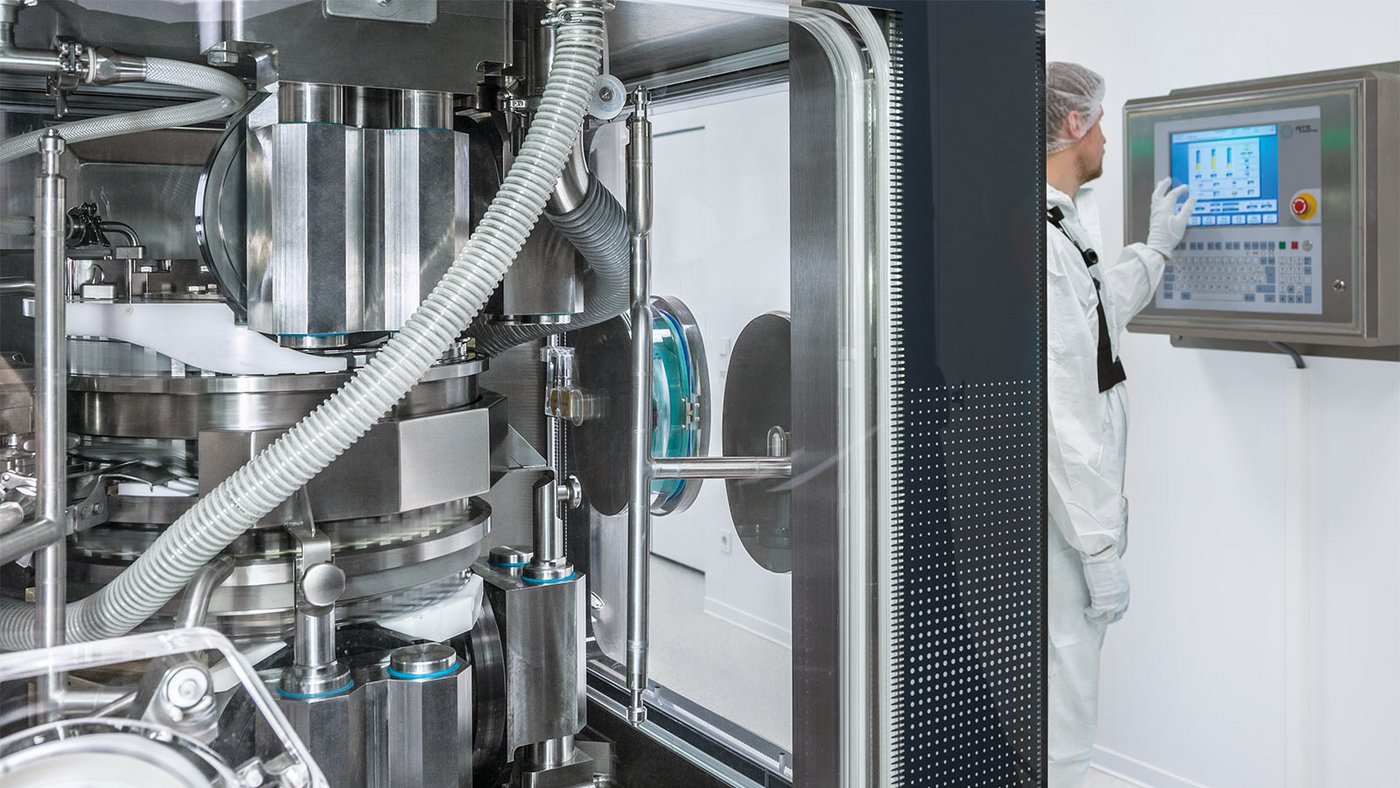
The measurement procedure involves the set-up of tablet presses and process equipment in every conceivable configuration. They generally run through a sequence of seven measurement cycles, where by retention during inward and outward transfer of tools or in the event of a power failure is established. Each of the cycles is repeated three times per sequence.
The test plant
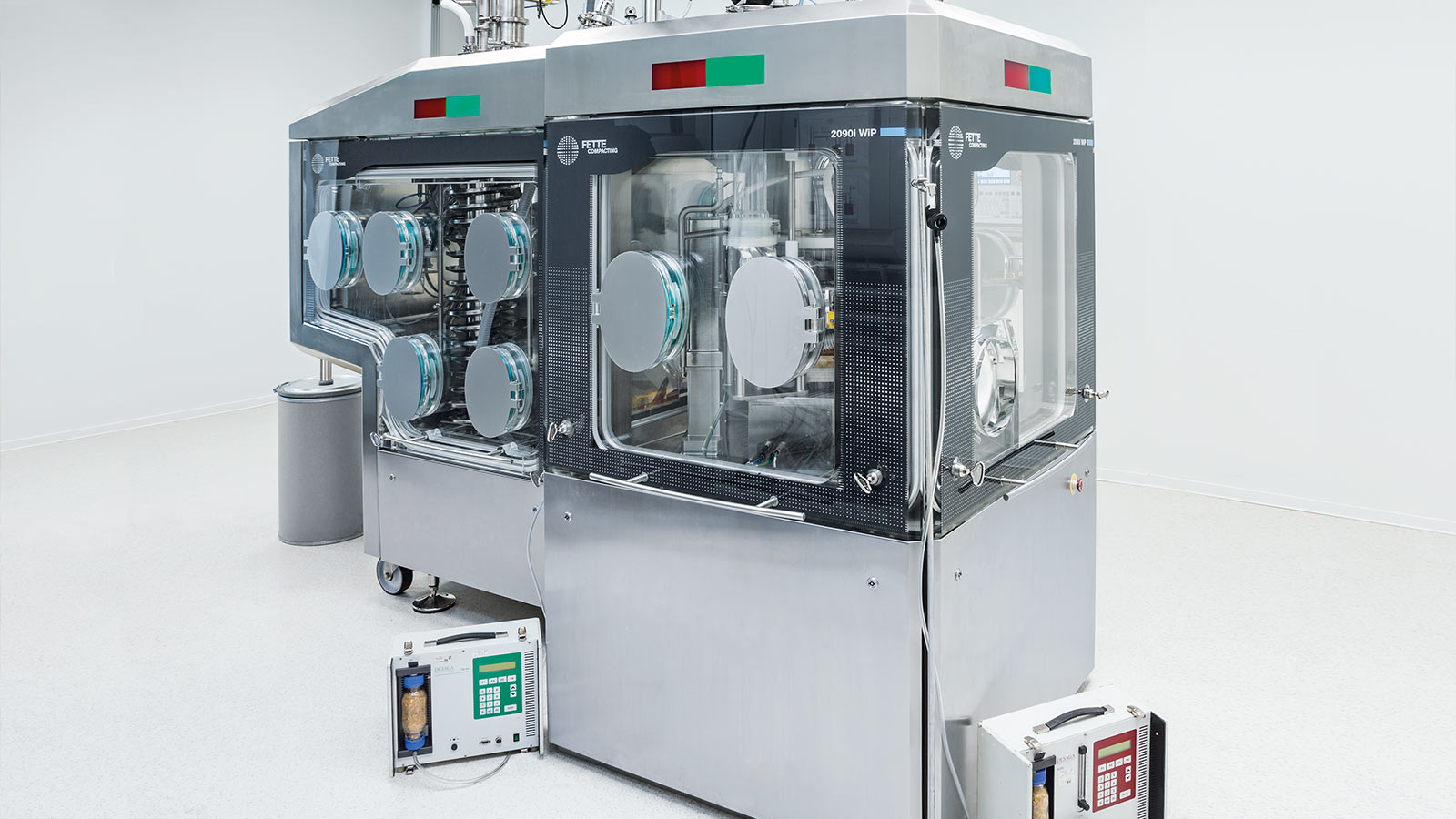
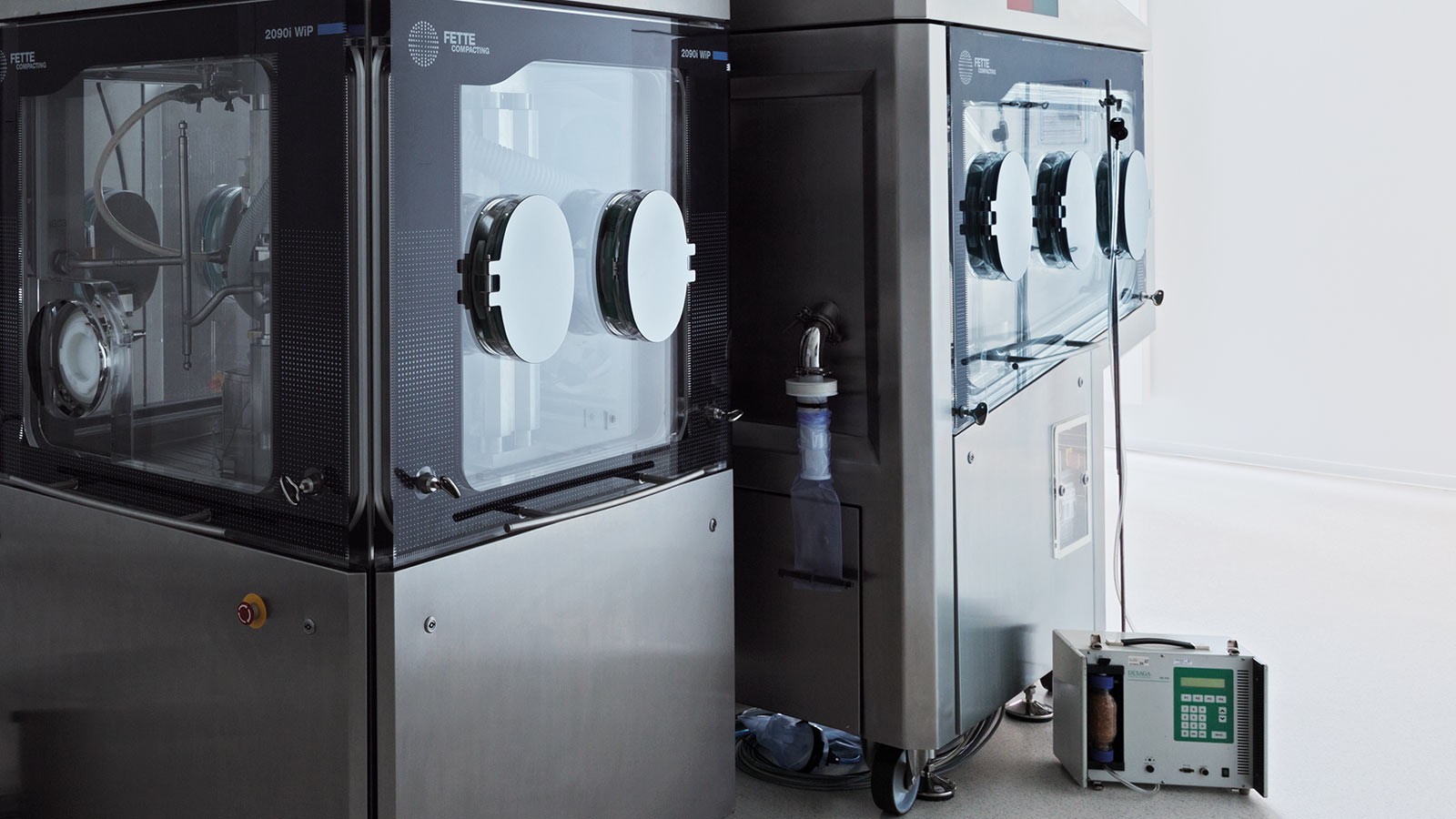
The 2090i WiP tablet press with isolator stands for exposure measurements in line with the Containment Guard at the Fette Compacting Competence Center in Schwarzenbek.
2. Production
The operator sets up the tablet press and begins operation. The machine runs normally for half an hour in order to measure the retention performance during ongoing production. Typical processes, such as the withdrawal of sample tablets for quality control, are also tested in this cycle.
5. Cleaning the interior
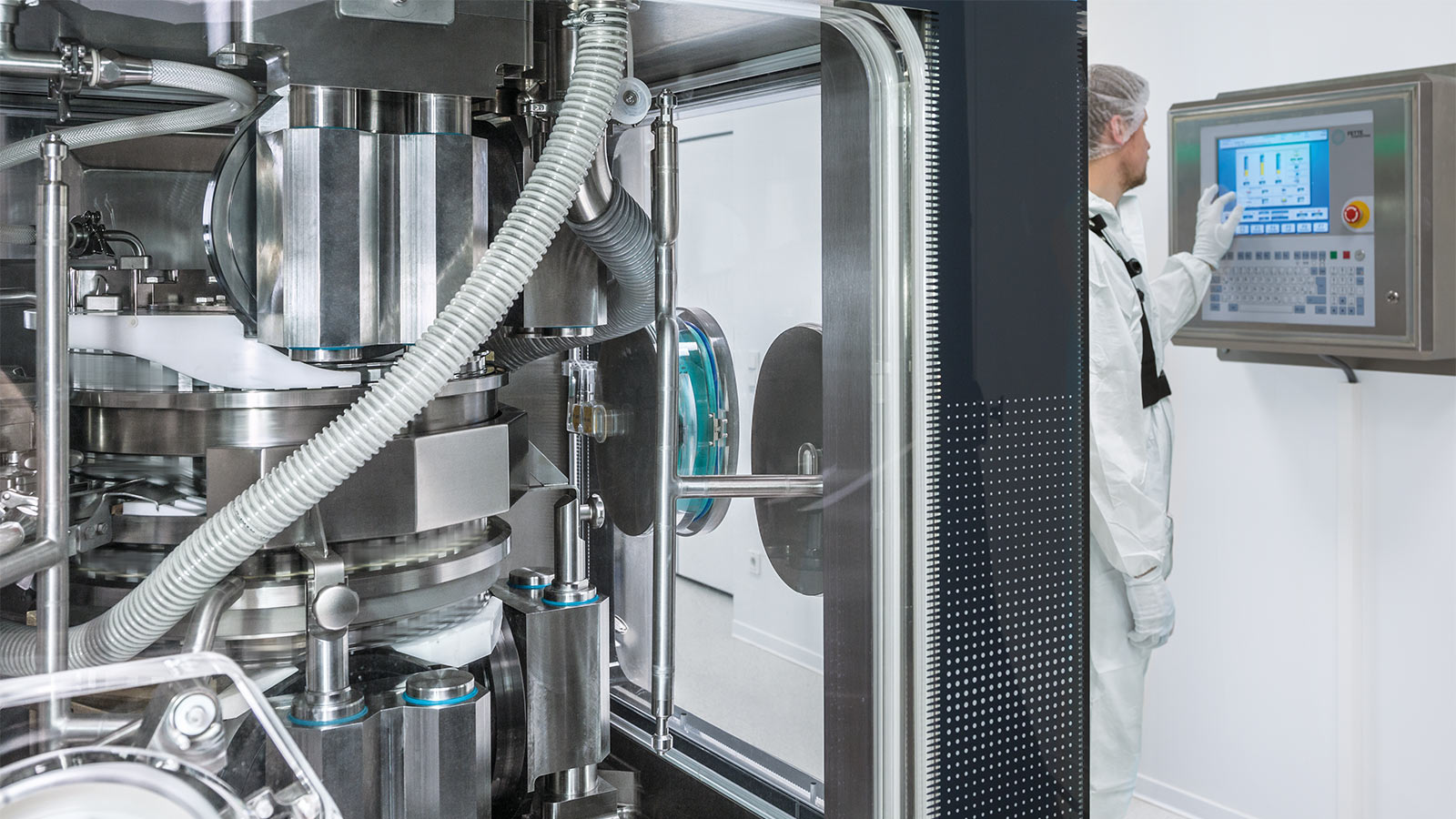
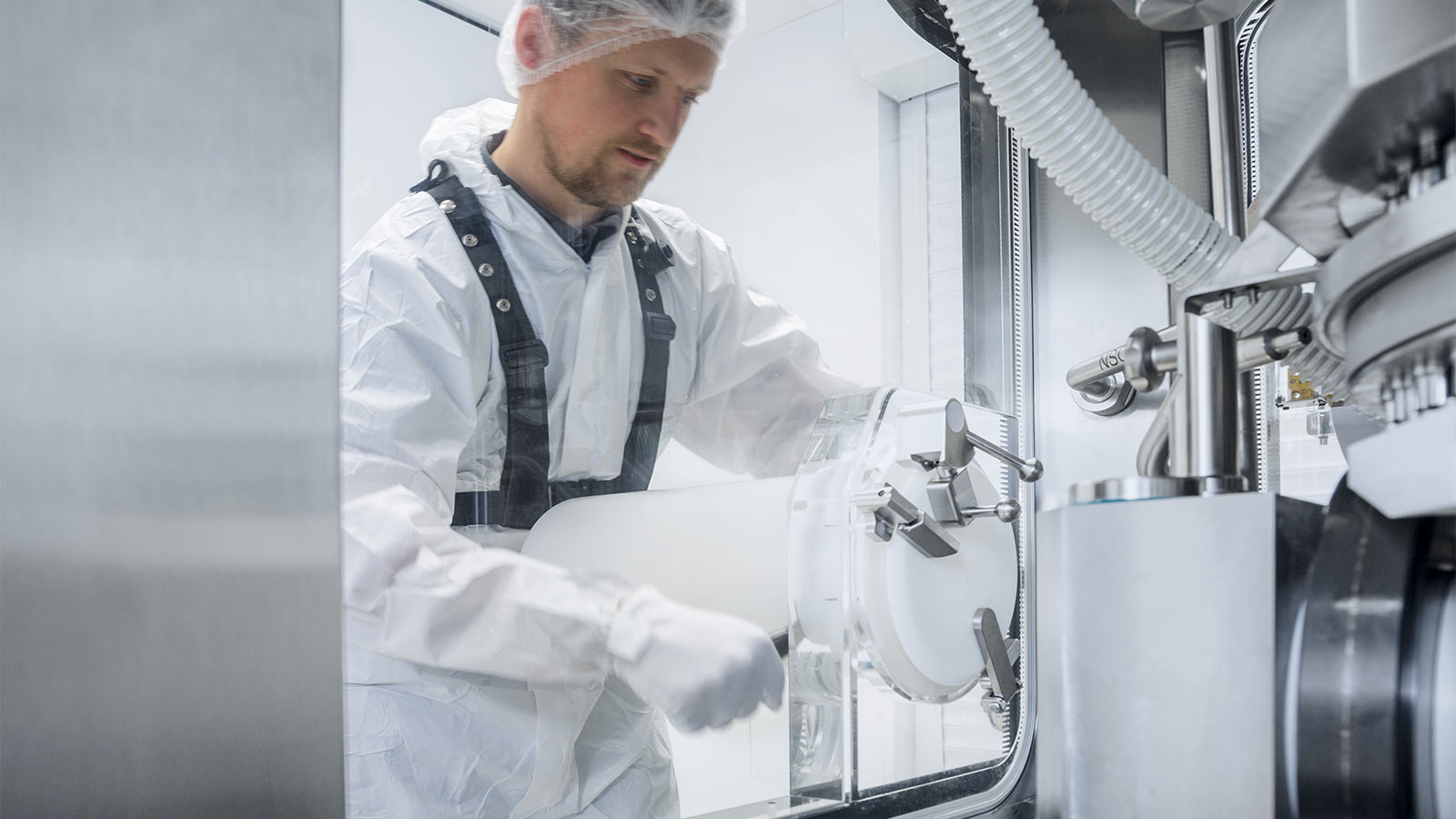
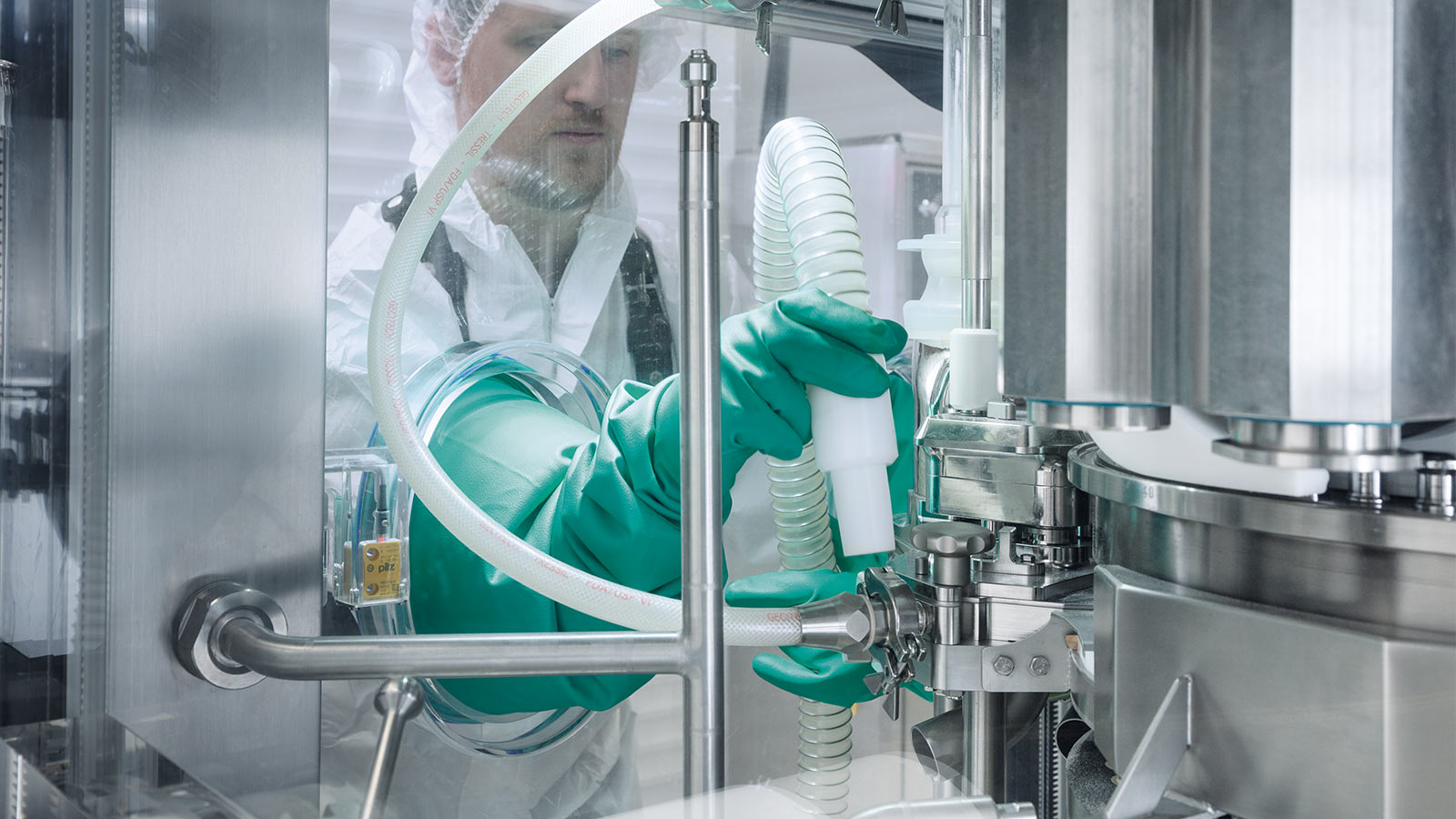
The operator reaches into the interior of the machine through the gloveports, and cleans the interior of the press room as well as the isolator, in relevant cases. Depending on the press, a manual washing gun is also passed through the port, and the components are cleaned again manually. The washing program then starts. The machine’s window flaps remain closed the whole time.
6. Removing process equipment
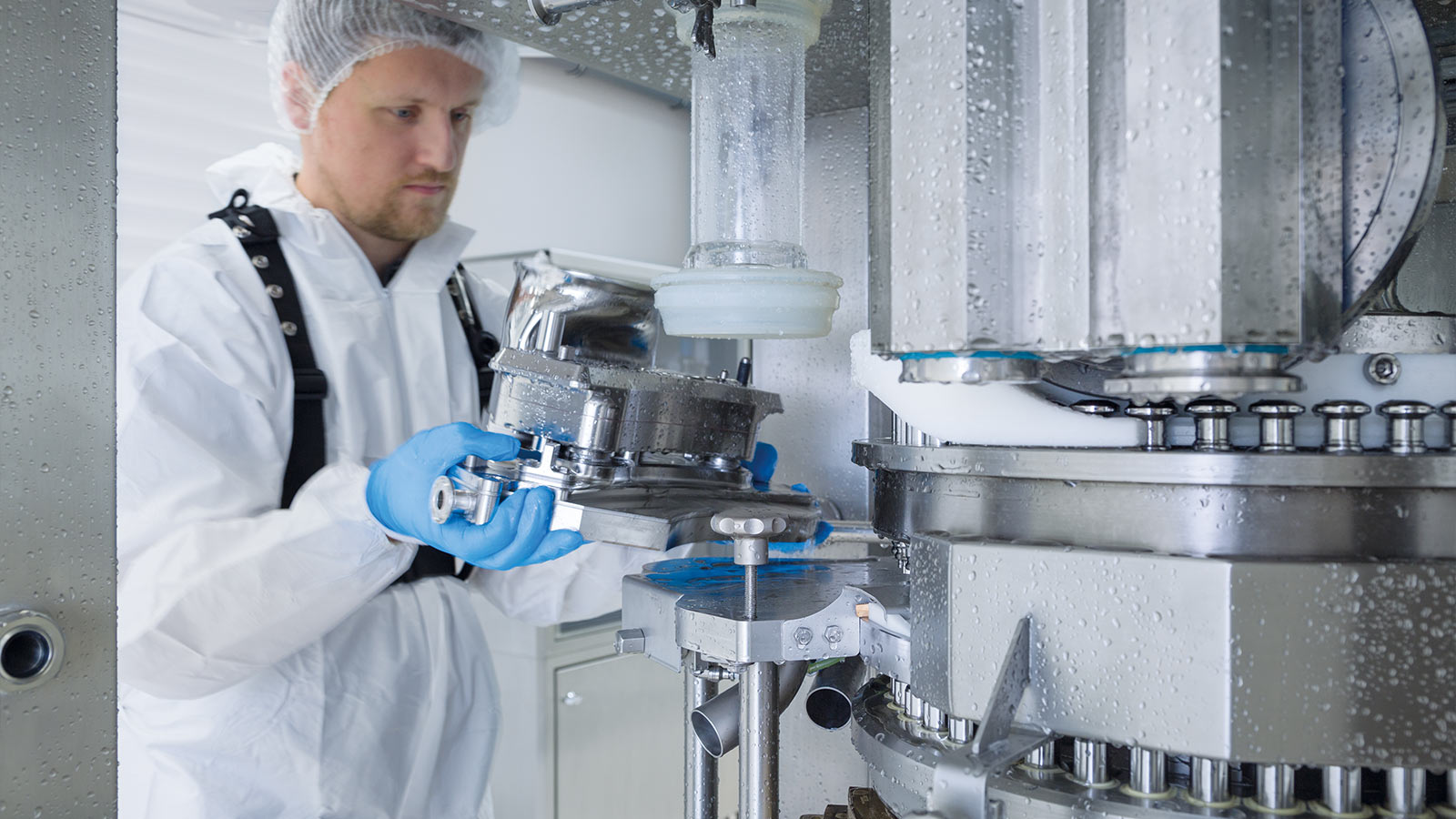
The upward deduster and the Checkmaster are disengaged. There are two measurement scenarios for this step: tablet presses with isolator and tablet presses with washable process equipment. This step is omitted if a machine with an isolator is measured, and the process proceeds from cycle 5 straight to cycle 7.
Related News