



Analysis. Understanding
the material, safeguarding
the process.
Before you scale a formulation or optimize a process, you need a clear understanding of your material and its properties. We specifically analyze the parameters that are crucial for your production – from particle size and compaction behavior to chemical composition. This is how we create the database on which you can build your further development and ensure safe production.
Material Characterization
We systematically determine critical material attributes(CMAs) such as particle size distribution, water activity, and density – using precise methods such as laser diffraction. We also evaluate your material using our Qualified Experts Database (QED), including its processability in relevant steps. This means that even with small quantities of powder, you can assess whether your product is more suitable for a batch-based or continuous process. This creates a sound basis for scalable, efficient, and robust processes.
Material Characterization
Together, we demystify the material behavior of your product.
HPLC Analysis
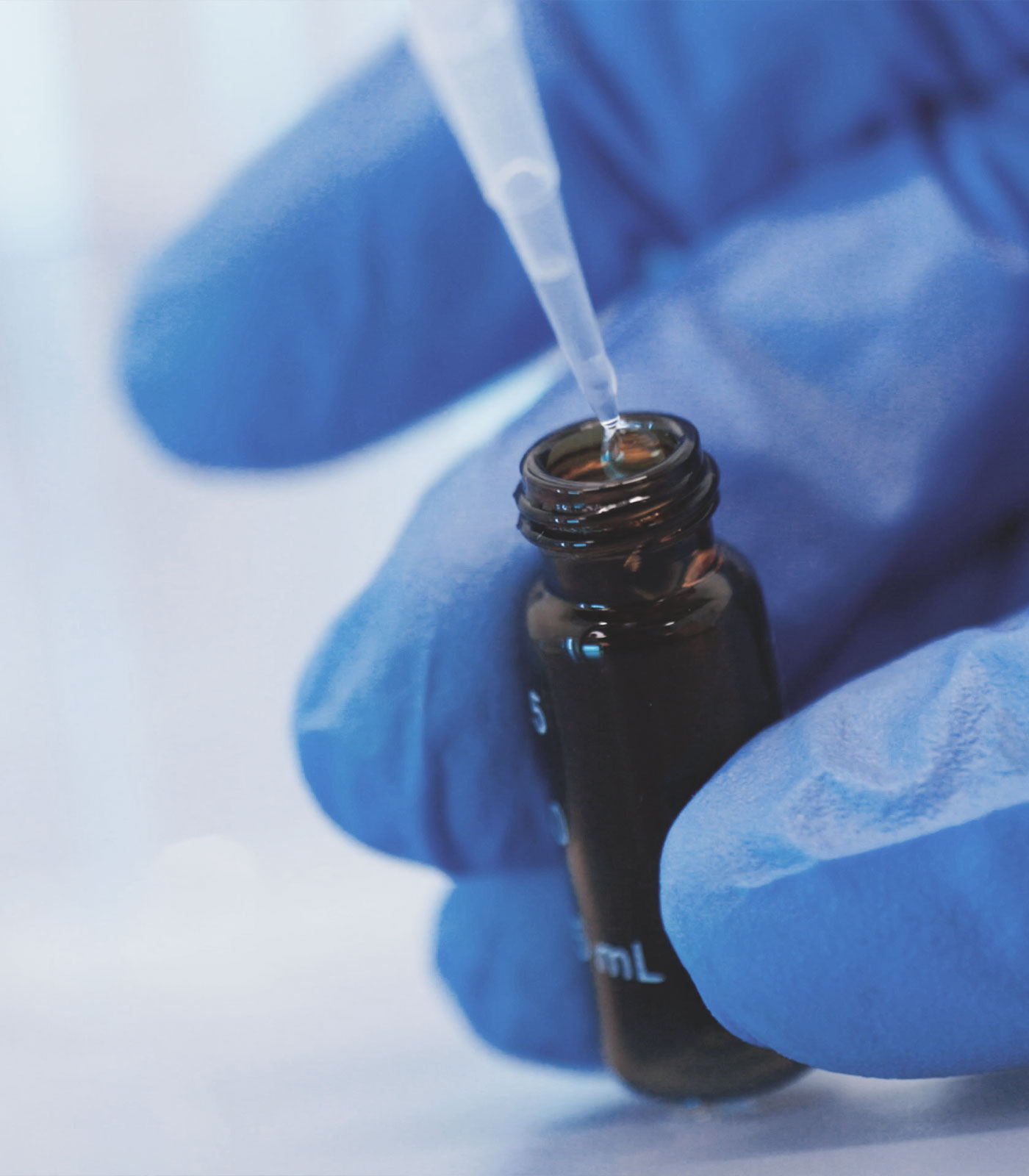
Our HPLC analytics supply precise reference data for active pharmaceutical ingredients (APIs), impurities, and degradation products – as a complementary component in formulation, process and ePAT development. To ensure that the analytics can be seamlessly integrated into your project, we handle method development and method transfer. This ensures you always have reliable reference values at your disposal without having to rely on external laboratory capacities. The data obtained supports both the development and construction of ePAT models and enables precise process monitoring at a later stage. This provides you with reference analytics from a single source that is reliable, consistently documented, and can be integrated directly into your development process.
HPLC Analysis
Your analysis should be reliable and support you throughout the entire development process.

Insights into Our Analytical Services.
Learn more about our analytical services, their applications, and the specific benefits they offer for your development processes. Find answers to key questions about our services, their use, and working with Fette Compacting.
What added value does Fette Compacting's material characterization offer as compared to standard laboratory testing?
The added value goes beyond simply measuring individual powder properties. It lies in evaluating their impact on the tableting process under real-world manufacturing conditions. In addition to standardized analyses according to the European Pharmacopoeia (Ph. Eur.) including bulk and tapped density, Carr Index, angle of repose, residual moisture, water activity, and particle size distribution the results are benchmarked against material and process data from Fette Compacting's Qualified Expert Database (QED). This allows for a practical assessment of powder behavior during tableting, including specific recommendations for optimizing formulations, process equipment, and manufacturing processes.
How does material characterization improve process stability in tablet manufacturing?
The identified material properties reveal how a powder behaves during feeding, flow, and tablet compression. Parameters such as the Carr Index, bulk and tapped density, moisture content, water activity, and particle size distribution provide insights into potential risks, including poor flowability, dosing variability, segregation, sticking, non-uniform compaction, or inconsistent finished tablet quality. Based on these findings, the formulation, process parameters, and subsequent development activities can be optimized to achieve a more robust and reproducible tableting process.
At which stage of pharmaceutical development does material characterization deliver the greatest value? Along the entire curve, or is the value higher at particular stages such as early formulation development, process development or scale-up?
Material characterization delivers significant value during both early formulation development and scale-up. Early in the development process, it helps identify critical material attributes and supports the selection of appropriate formulation and process strategies. During scale-up, it enables a better assessment of process risks, the evaluation of differences between materials or batches, and the comparison of existing process data with new analytical results. This provides a stronger foundation for development decisions while reducing the risk of process issues during later stages of tablet manufacturing.
Where can Fette Compacting's material characterization services be performed, and how long does a typical material characterization take?
Material characterization is performed in Fette Compacting's laboratory. The service includes material analysis, evaluation of the material properties, and a comprehensive report including the results and recommendations for the next development steps. The overall project timeline depends on the scope of the analysis and the number of materials to be evaluated. The schedule is defined individually for each project in close coordination with the end user.
How much powder is required for a material characterization?
For a standard material characterization, an average of approximately 900 g of powder is required. However, the exact sample quantity depends on the scope of the analysis and the number of tests to be performed. The required sample amount is defined on a project-specific basis and agreed upon with the end user before the analysis begins.
What are the advantages of Fette Compacting's HPLC analysis as compared to conventional HPLC testing performed in a traditional laboratory?
Fette Compacting's HPLC analysis provides reproducible, regulatory-compliant reference data for accurate API quantification. These reference values can be used, among other applications, as the foundation for Fette Compacting's ePAT system by supporting the development and validation of near-infrared (NIR) models. As a result, the service combines analytical precision with direct benefits for process control, pharmaceutical development, and tablet manufacturing.
Which standards and regulatory guidelines does Fette Compacting follow when performing HPLC analyses?
The HPLC analysis is performed with a strong focus on data integrity, reproducibility, comprehensive documentation, and results that support regulatory requirements. Specific regulatory standards and analytical method requirements are defined on a product-specific basis according to the individual project requirements.
Can Fette Compacting develop and validate customized HPLC methods for pharmaceutical applications?
Yes. In addition to transferring existing HPLC methods, Fette Compacting also offers the development of new HPLC methods for specific products and defined analytical objectives.
What is and will
continue to be important.
Articles and reports on current developments and technological innovations. For even more efficiency!